

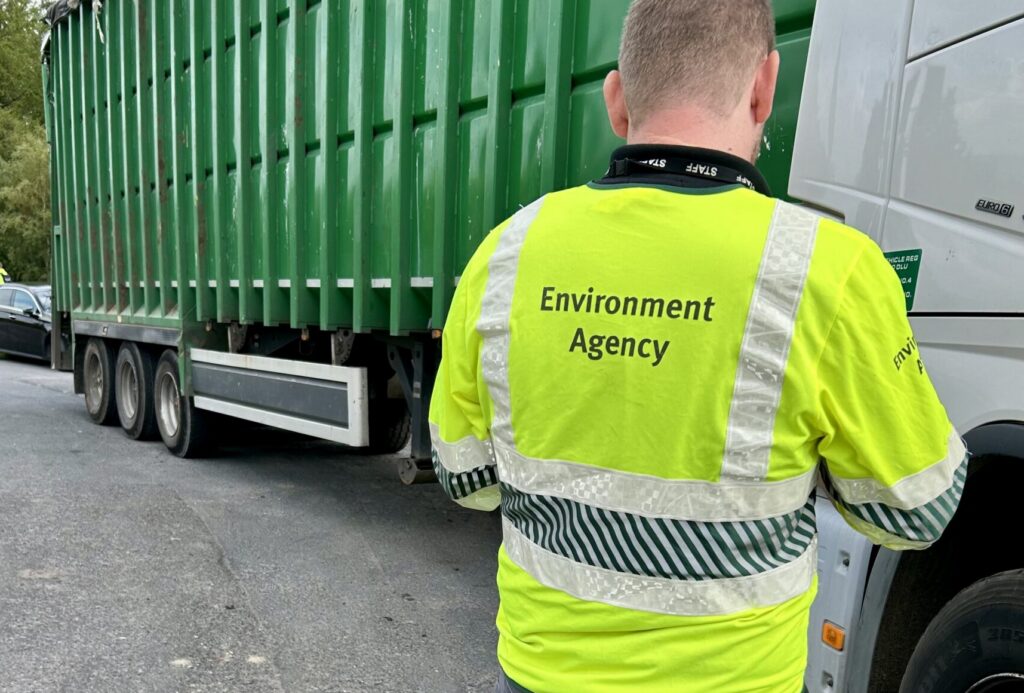
Variable Monetary Penalties (VMPs) are civil sanctions which can be imposed by the EA rather than pursuing prosecution through criminal courts.
The process previously had a cap of £250,000, but this was removed on 1 December 2023 following petitioning from the EA.
The change extended VMPs to cover offences under the Environmental Permitting Regulations 2016, such as operating a waste site without a permit or knowingly causing or permitting another to operate without a permit.
The enhanced powers are intended to allow the EA to avoid being caught up in the backlogged system and to recover the cost of investigating and imposing a VMP through an enforcement cost recovery notice.
In the almost three years since the changes were implemented, a Freedom of Information (FOI) request has revealed that the Agency has only issued five VMPs – none of which went to waste operators.
Only one of these – which went to a water company – exceeded £250,000 and is still subject to appeal.
Response from the Environment Agency
An EA spokesperson said: “We have a range of enforcement options available to tackle environmental offences, including Variable Monetary Penalties and up to criminal prosecution.
“We select the appropriate course of action based on the facts and circumstances of each case, including the seriousness of the offence and environmental harm.”
The Agency explained that VMPs are calculated in line with its Enforcement and Sanctions Policy and must be “proportionate to the offence and the circumstances of the offender”.
The removal of the £250,000 cap therefore gives the EA greater scope to impose higher penalties, including for eligible waste offences, where the evidence and circumstances justify this.
If a VMP is not complied with, it remains open to the EA to pursue a criminal prosecution through the courts.
The Agency added that the lack of VMPs issued to a waste operator “reflects the individual cases dealt with since the change, rather than any policy not to use higher VMPs in the waste sector”.
‘The EA needs to learn to use the full force of its powers’
Samantha Riggs, a Barrister specialising in representing regulated industry in environmental matters, said: “In recent years, there have been a number of decisions to prosecute matters that, even on the regulator’s case, have had at worst a ‘minor’ environmental impact.
“In one particular case, the judge asked why the case was in his court. It raises the question as to why so much of the EA’s resources are being used to prosecute these types of cases, especially when a speedier and more cost-effective option is available.
“Is this just another example, like Restriction Orders, of the EA not knowing the extent of the powers it has?
“Rather than needing new powers, the EA needs to learn to use the full force of the powers it already possesses.”
Earlier this year, letsrecycle.com revealed that the EA has only used its unique enforcement powers to prevent waste crime six times since being granted them in April 2018.
Section 109A of the Environment Act gives the EA the power to issue Restriction Orders to those who wish to enter specific premises carrying waste.
The order would prevent criminals from entering the site in an effort to prevent the accumulation of “waste mountains” which cost millions to clear.
The powers are intended to be used in cases of repeated illegal dumping and similar incidents.
Riggs also identified that, in the House of Lords Inquiry, the EA reported that its ability to tackle waste crime was significantly hampered by the lack of funding for criminal prosecutions and delays experienced in the criminal courts. However, VMPs – which would alleviate some of these issues – were not brought to the attention of the Lords.
Impact of waste crime
Waste crime is estimated to cost the English economy between £1 billion and £2 billion annually, with roughly 20% of waste thought to be handled illegally.
In March 2026, the government released its Waste Crime Action Plan, which included an additional £45 million in funding for the Environment Agency.
The plan sets out what ministers describe as a “zero-tolerance” approach to illegal dumping across England, aiming to tackle illegal activity at its source, close regulatory loopholes, and strengthen the ability of enforcement bodies to intervene earlier.
Anyone with information about suspected waste crime is encouraged to report it to the Environment Agency’s 24-hour incident hotline on 0800 80 70 60, or anonymously via Crimestoppers on 0800 555 111.

Register for free to comment