

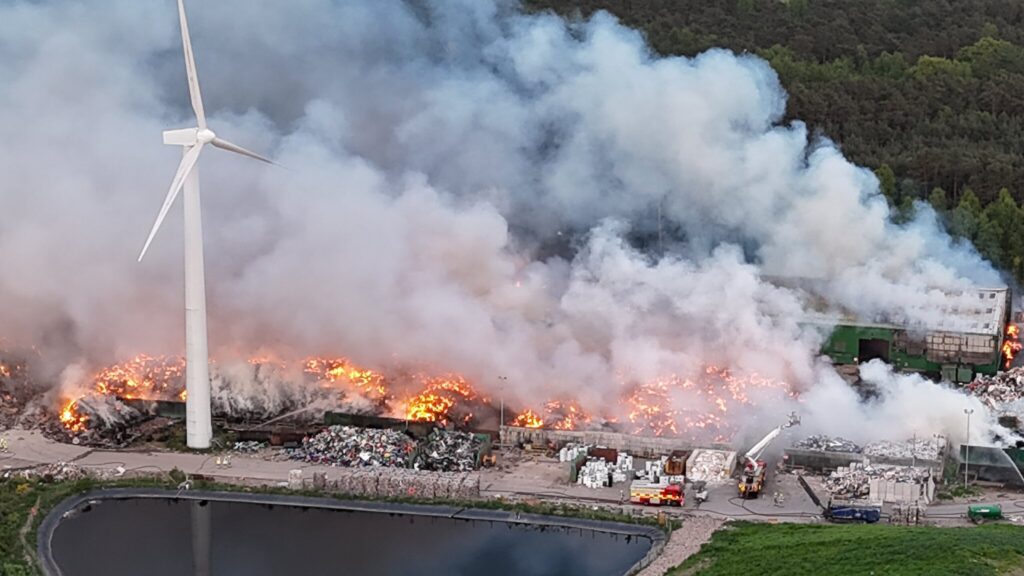
Figures obtained from fire and rescue services through Freedom of Information (FOI) requests suggest that fires have increased across several categories, including landfill sites, recycling facilities and waste storage buildings.
However, the data also highlight differences between locations. While some categories have seen substantial increases, the figures do not establish a single explanation for the wider trend.
Landfill and recycling facilities see rise in fires
Landfill fires more than doubled in the latest full-year figures supplied by both the London Fire Brigade (LFB) and Scottish Fire and Rescue Service (SFRS).
The LFB recorded 19 fires in its landfill-site category in 2024/25, rising to 45 in 2025/26 – an increase of around 137%.
SFRS also recorded a rise in landfill fires, from 10 in 2024 to 21 in 2025. The service recorded 16 landfill fires so far in 2026, with data running to 25 September.
The figures revealed by the FOIs also point to increases in several other types of waste premises.
West Midlands Fire Service (WMFS) recorded 16 fires at scrapyards and metal recycling facilities in 2025, up from 12 in 2024. Nine have already been recorded from January to June 2026.
LFB reported an increase in recycling plant fires, from 20 in 2024/25 to 24 in 2025/26, and 13 already in the four months from 1 April 2026 to 31 July 2026.
Greater Manchester Fire and Rescue Service’s figures showed a more pronounced change in its waste-related incident totals, from 30 in 2024 to 72 in 2025. However, much of this rise came from occurrences classified as “secondary incidents”, which tend to refer to low risk fires and increased from nine to 55, and the refuse or rubbish-tip category, which rose from nine to 54.
Devon and Somerset Fire and Rescue Service similarly saw a growth from 12 waste and recycling fires in 2024 to 29 in 2025, and 15 up until August in 2026.
In particular, refuse and recycling collection vehicle fires grew considerably, from three in 2024, up to 13 in 2025, and 9 so far in 2026. Vehicle fires continue to be an ongoing issue, as reflected in the LFB’s figures, which recorded 74 fires involving waste-carrying vehicles in 2024/25 and 70 in 2025/26, with 35 recorded between April and July 2026.
Lithium-ion batteries at heart of concerns
Separate research published by recycling comparison website Compare and Recycle examined fires at bin lorries and waste recycling centres suspected of being caused by lithium-ion or other lithium batteries.
The company submitted FOI requests to all 49 UK fire and rescue services. It received 46 responses, of which 40 provided usable data; 21 services supplied complete datasets dating back to 2019.
Across those 21 services, Compare and Recycle recorded 103 incidents between 2019 and 2022, compared with 278 from 2023 to June 2026 – a rise of 170%.
The research found that Greater Manchester recorded 32 suspected battery-related fires in the period examined, with incidents increasing by 440% between the comparison periods.
Lithium-ion batteries are used in a wide range of products, including phones, vapes, power tools and e-bikes. If a battery is damaged or punctured – including during waste collection, compaction or processing – it can ignite.
Summer heat coincides with spike in waste fires
The Scottish figures also show a rise in incidents during the warmer months.
May was the busiest month in each of the three years examined, with 71 fires recorded in 2024, 103 in 2025 and 115 in 2026. July also saw 87 incidents in 2026, which was the second highest spike in the year.
The figures come amid reports of a summer spike elsewhere in the UK. The East London Waste Authority reported 13 fires at waste facilities over three days during the late-July heatwave, when temperatures in Greater London reached 35.2°C and incidents exceeded 4.3 times baseline levels.
With the increased fire risk associated with hotter weather, the guidance includes advice for operators managing permitted waste sites where materials are stored or processed.


Register for free to comment