



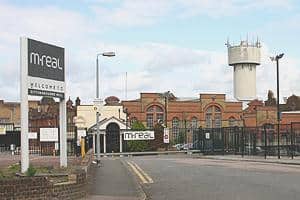
At present the recycled fibre plant at Sittingbourne turns waste office paper into a pulp mixture and uses paper collected primarily in south east England. It accounts for about an estimated 90% of the paper collected in the London area. The pulp mixture is then piped to the nearby M-Real paper mill to make 100% recycled Evolve paper.
Companies and councils have bought Evolve, often on the back of collections of waste paper material. And, the Evolve brand has won the support of recycling development organisation London Remade as a recycled paper suitable for a number of uses and because of its closed-loop nature. While London Remade cannot specifically recommend the product, it has had a close relationship with M-Real, which in turn has been a principal sponsor of the organisation. As yet it is unclear whether M-Real will keep this relationship with London Remade.
After November 2008 the Evolve paper mill will instead make a cardboard material under the ownership of DS Smith' subsidiary St Regis and will not use the pulp mixture made nearby. However, the recycled fibre plant will continue to take in waste office paper to produce the pulp mixture for the Evolve brand. Using about 180,000 tonnes of waste paper a year, the input to the plant is important to collectors of paper, including the contractual arm of the Independent Waste Paper Processors Association, which supplies a substantial tonnage of office-sourced waste paper.
The decision now made will contribute to positive price development in the office paper sector.
Mikko Helander, M-Real
Instead of making Evolve in Kent, M-Real is now to take the pulp mixture to France in a baled form under a three-year agreement with DS Smith. The mixture will go to its Alizay mill just across the English Channel near Rouen, not far from the port of Le Havre.
M-Real Corporation chief executive Mikko Helander said: “We are streamlining our office paper production by concentrating it on the newer mills. The continuation of the present production in the New Thames mill would require major investments. And it is also expected that the decision now made will contribute to positive price development in the office paper sector.”
Mr Helander's comments on pricing reflect a trend within the paper industry worldwide to reduce production sites to try and ensure there is no overcapacity and also to reinforce prices.
PM6
The good news side of the Sittingbourne sale in terms of UK production comes from the fact that converting the M-Real mill, which will take about six weeks in November and December this year, more waste cardboard and mixed paper will be reprocessed in the UK. The former M-Real Evolve mill paper machine will be known as PM6 and contribute to DS Smith producing about 30% more corrugated material than it currently does at its Kemsley mill, giving a total production of about 1.2m tonnes a year.
Additional investment is to be carried out by St Regis at Kemsley for the construction of a new stock preparation plant which will take in mixed the waste cardboard, pulp it and sieve it to produce a material for use in the former Evolve mill.
In terms of increased demand for used cardboard by the mill, it is likely to source a lot of material from associate business Severnside Recycling which already collects more material than it can use in the UK. Severnside is also expected to take on the buying role for the Evolve recycled fibre plant although current arrangements are expected to continue until November.
Workforce changes at the M-Real plant will be discussed later this year by St Regis. M-Real currently employs 282 people while St Regis employs 270. There is an additional workforce of 27 at the Grovehurst combined heat and power plant at Kemsley which St Regis has acquired with the M-Real plant.

Register for free to comment